Home › Dive Sites › Indonesia › Bali › Pemuteran Bay

Pemuteran Bay

📍 Bali, Indonesia

Bluehead Blenny (Ecsenius ops) — recorded at Pemuteran Bay

Pemuteran Bay is a dive site in Bali, Indonesia. The sea floor at the site position lies at about 28 meters. Currents typically run at 0.8 km/h and reach 1.4 km/h on the strongest days. Water temperatures range from 28°C in August to 30°C in November. The typical daily tidal range is about 1.3 m. Species recorded in the area include Bluehead Blenny, Darkspotted Sole, Rectangular False Cockle, Bluestreak Cleaner Wrasse and Highfin Coralgrouper.

Dive Conditions

⬇️
Seabed Depth
28m
💨
Current
0.8 km/h (1.4)
🌡️
Water Temp
28–30 °C

🤿 Book a Diving Tour in Pemuteran Bay

Tours powered by GetYourGuide. FindADive may earn a commission on bookings.

Typical Current 0.8 km/h (up to 1.4)
Seabed Depth 28 m
Water Temperature 28–30 °C
Tidal Range 1.3 m (typical daily)
GPS -8.1225°, 114.6485°

Data sources: currents and water temperature from Open-Meteo Marine (CC BY 4.0), hourly model values 2024; seabed depth from the GEBCO 2020 Grid, sampled at the site coordinates (grid resolution about 450 m). Tidal range is the median daily range of modelled sea level from Open-Meteo Marine, hourly values 2024. Species observations from iNaturalist, checked against the World Register of Marine Species.

Conditions at Pemuteran Bay through the year

Sea surface temperature at the site coordinates, averaged per month from hourly model values for 2024. The water is warmest in November at about 30 °C and coolest in August at about 28 °C, a spread of 2.2 degrees across the year.

Monthly sea surface temperature at Pemuteran Bay (°C)
JanFebMarAprMayJunJulAugSepOctNovDec
29.5 29.5 29.7 30.2 30.0 29.3 28.7 28.2 28.4 29.4 30.4 30.2

Ocean current at the site runs at a typical 0.8 km/h. In the strongest tenth of the hours modelled for 2024 it reaches 1.4 km/h, which is when entries are normally timed to slack water at the turn of the tide.

The tide moves the water level by a median 1.3 m over a day, and by up to 1.8 m on the largest days of the month. That range drives how much water is exchanged over the reef and when the current turns.

Offshore wave statistics are not shown for Pemuteran Bay: within 10 km of the site there is land in the directions from which 91 % of the waves in the area arrive, so open-sea values would overstate the swell at the site itself.

The seabed directly under the site coordinates sits at about 28 m. This is a bathymetry grid value with a cell size of roughly 450 m, so it describes the depth of the area rather than the deepest point a dive can reach.

How Pemuteran Bay compares

These comparisons use only the measured values above, set against the 376 dive sites published on findadive.com. A percentage shows the share of other sites with a lower (or higher) value, so it reads the same way wherever the site is.

Pemuteran Bay compared with all listed sites and with Bali
MeasureThis siteCompared with all sitesMedian in Bali
Mean water temperature29.5 °Cwarmer than 56 % of the other 375 sites29.1 °C (99 sites)
Water temperature in the coolest month28.2 °Cwarmer than 55 % of the other 375 sites27.8 °C (99 sites)
Typical current0.8 km/hweaker than 73 % of the other 375 sites3.2 km/h (99 sites)
Current in the strongest 10 % of hours1.4 km/hweaker than 77 % of the other 375 sites5.7 km/h (99 sites)
Median daily tidal range1.3 msmaller than 74 % of the other 375 sites1.5 m (99 sites)

Water temperature, current and tide from Open-Meteo Marine (CC BY 4.0), hourly model values for 2024 at -8.1225°, 114.6485°. Seabed depth from the GEBCO 2020 Grid. Wave statistics from ERA5-Ocean via Open-Meteo Marine (contains modified Copernicus Climate Change Service information 2015–2024), daily maximum wave height on a 0.5° grid; land shelter tested against Natural Earth coastlines.

Marine life recorded at this site

Research-grade observations from iNaturalist within about 12 km of these coordinates.
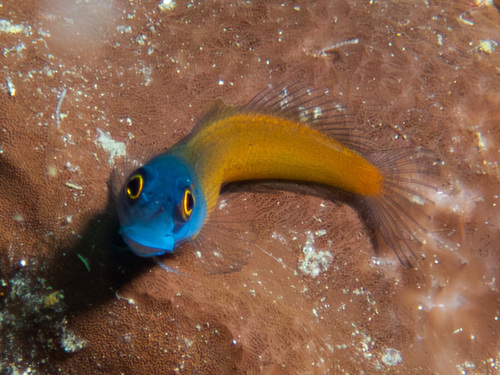
Bluehead Blenny (Ecsenius ops)
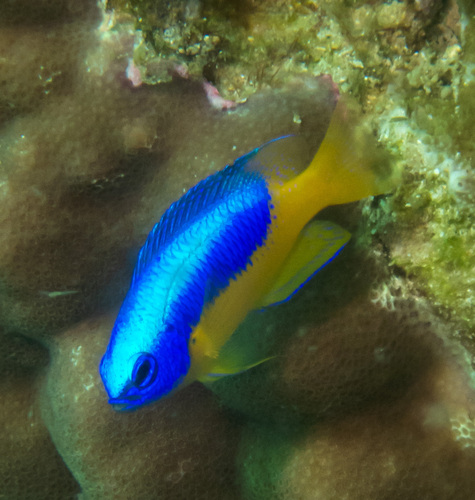
Bluehead Blenny Ecsenius ops A small combtooth blenny with a bright blue head and a yellow to brown body, often seen perched on coral or rock.to 5 cm · 1-15 m · by daycoral heads and rocky outcrops on shallow reefsLook for its head poking from a small hole; it darts back in if approached too quickly. (c) portioid, some rights reserved (CC BY) · observation
Darkspotted Sole (Liachirus melanospilos)
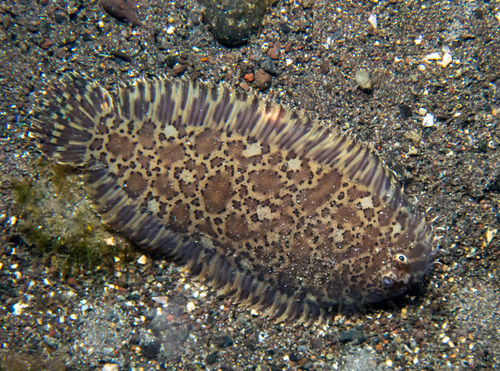
Darkspotted Sole Liachirus melanospilos A flat, oval-shaped bottom-dwelling fish with a dark-spotted upper side and a pale underside, often partially buried in sediment.to 15 cm · 1-30 m · at nightsandy or muddy seabed, near seagrass or rubbleLook for a faint outline or the eyes on the sediment; it flushes easily, so a torch held at a low angle helps. (c) portioid, some rights reserved (CC BY) · observation
Rectangular False Cockle (Cardita variegata)
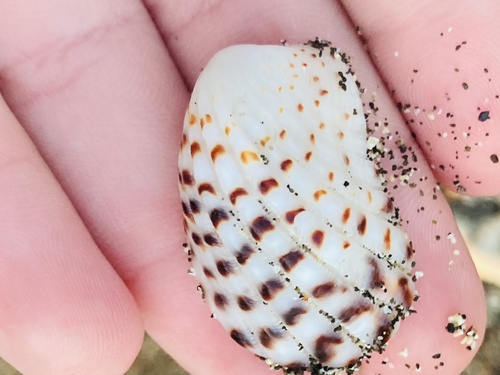
Rectangular False Cockle Cardita variegata A small, rectangular bivalve with a thick, sculptured shell, often found nestled in crevices or attached to hard substrates.to 3 cm · 0-30 m · day and nightcrevices and under rocks on reefsLook for its distinctive shape and radiating ribs on the underside of coral rubble or in small holes. (c) River Ahlquist, some rights reserved (CC BY) · observation
Bluestreak Cleaner Wrasse (Labroides dimidiatus)
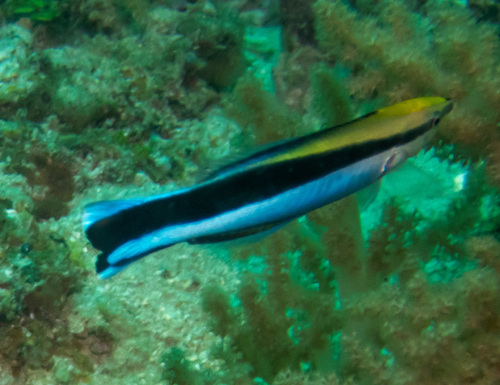
Bluestreak Cleaner Wrasse Labroides dimidiatus A small, slender wrasse with a distinctive black lateral stripe that runs from snout to tail, bordered by electric blue above. It performs cleaning services for other fish.to 14 cm · 1-40 m · by daycoral-rich areas of reef, often at established cleaning stationsLook for a queue of larger fish hovering motionless; the wrasse will be darting in and out of their gills and mouths. (c) portioid, some rights reserved (CC BY) · observation
Highfin Coralgrouper (Plectropomus oligacanthus)
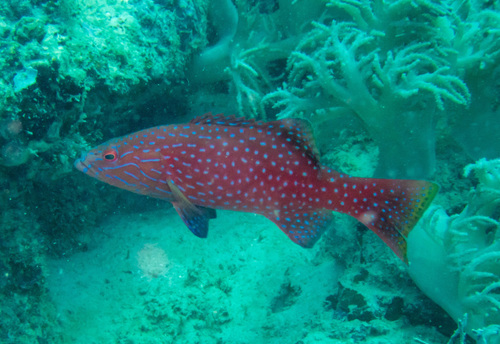
Highfin Coralgrouper Plectropomus oligacanthus A robust grouper with a variable reddish to brownish body, often with small blue spots, and a distinctive tall, sail-like first dorsal fin.to 120 cm · 5-100 m · by dayouter reef slopes and channelsOften seen resting on the reef or hovering near overhangs; the high dorsal fin is most prominent when the fish is stationary. (c) portioid, some rights reserved (CC BY) · observation
Goldbelly Damsel (Pomacentrus auriventris)
Goldbelly Damsel Pomacentrus auriventris A small, bright yellow damselfish with a distinctive golden-orange belly and a black spot at the base of the pectoral fin.to 7 cm · 2-15 m · by daycoral-rich areas of lagoons and outer reef slopesLook for it darting among branching corals like Acropora, where it retreats when threatened. (c) portioid, some rights reserved (CC BY) · observation
Orbicular Cardinalfish (Sphaeramia orbicularis)
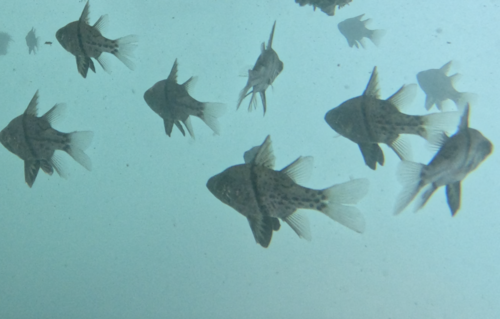
Orbicular Cardinalfish Sphaeramia orbicularis A small, deep-bodied cardinalfish with a silvery body and a pattern of dark spots that form vertical bands, often seen hovering in small groups.to 15 cm · 1-20 m · at nightsheltered lagoons and reef flats, near caves or overhangsLook for them sheltering motionless in shaded areas during the day; they become more active and easier to spot after dusk. (c) Sockrosma, some rights reserved (CC BY) · observation
Mexichromis pusilla (Mexichromis pusilla)
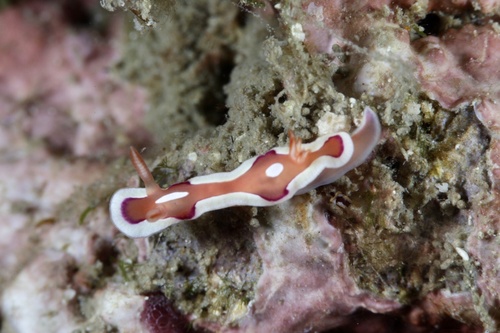
Mexichromis pusilla Mexichromis pusilla A tiny nudibranch with a translucent white body covered in small, rounded, purple-tipped tubercles.to 2 cm · 5-25 m · day and nightsponges and tunicates on reef walls and slopesLook closely on encrusting sponges; its small size and colour make it easy to overlook. (c) Heine Jensen, some rights reserved (CC BY) · observation