Home › Dive Schools › Indonesia › Gili Air › Gili Air Divers / Freedive Gili Air

Gili Air Divers / Freedive Gili Air

SSI Dive Resort 📍 Gili Air, Indonesia ★★★★★ 5.0 (793 reviews)

Photo: no rights reserved · CC0 · via iNaturalist

Gili Air Divers / Freedive Gili Air is an SSI Dive Resort in Gili Air, Indonesia. The courses listed on its website include Scuba Diver, Open Water Diver, Advanced Open Water Diver, Rescue Diver and Emergency First Response. It is based at Gili Air, Gili Indah, Mataram, Kabupaten Lombok Utara, Nusa Tenggara Bar. 83125, Indonesia.

On Google it holds an average rating of 5.0 from 793 reviews.

Sea temperatures in the surrounding waters range from 28°C in August to 30°C in November. Species recorded near these coordinates include Green Sea Turtle, Orangebanded Coralfish, Blacklip Butterflyfish and Redshoulder Wrasse.

🤿 Book a Diving Tour in Gili Air, Indonesia

Tours powered by GetYourGuide. FindADive may earn a commission on bookings.

At a glance

  • 6 dive sites within 60 km: Air Slope (0 km) · Mirkos (1 km) · Air Wall (1 km) · Hidden Reef (1 km) · Mirko’s Reef (1 km) · Gili Air Harbor (1 km)
Certification SSI Dive Resort
Courses offered Scuba Diver, Open Water Diver, Advanced Open Water Diver, Rescue Diver, Emergency First Response, Deep Diver
Location Gili Air, Indonesia
Address Gili Air, Gili Indah, Mataram, Kabupaten Lombok Utara, Nusa Tenggara Bar. 83125, Indonesia
Google Rating ★★★★★ 5.0 793 reviews
GPS -8.3557°, 116.0757°
Operator ID 5b40985e-8f63-4bb4-8fd7-d27c7d4d4ab0

Sea temperature through the year

Average sea surface temperature at the coordinates of Gili Air Divers / Freedive Gili Air, Gili Air, Indonesia, by calendar month. The water is warmest in November at 30.3 °C and coldest in August at 28.2 °C, a spread of 2.1 kelvin over the year. Every month of the year averages 25 °C or more.

MonthJanFebMarAprMayJunJulAugSepOctNovDec
Sea temperature (°C)29.429.429.730.129.829.028.728.228.529.230.329.9

By season, the four quarterly averages at this location are spring (March to May) 29.9 °C, summer (June to August) 28.6 °C, autumn (September to November) 29.3 °C and winter (December to February) 29.6 °C.

Sea surface temperature from Open-Meteo Marine (CC BY 4.0), daily model means 2022-11 to 2024-12, sampled at the coordinates of this dive centre. Values are monthly averages of the daily means, not forecasts.

Marine life recorded in this area

Research-grade observations from iNaturalist near these coordinates.
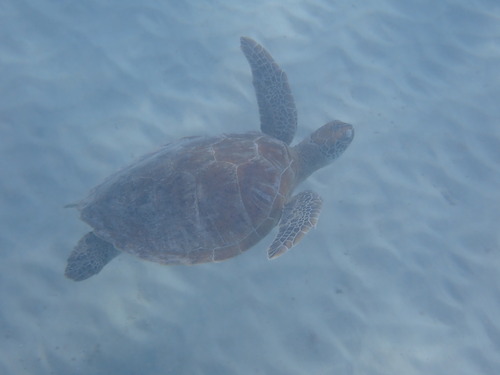
Green Sea Turtle (Chelonia mydas)
Green Sea Turtle Chelonia mydas A large sea turtle with a smooth, heart-shaped carapace, often seen swimming or resting on the seabed.to 1.5 m · surface to 40 m · day and nightseagrass beds, coral reefs, and sandy areasRemain still and avoid sudden movements; the turtle may approach if it feels unthreatened. (c) Kelvin Perrie, some rights reserved (CC BY) · observation
Orangebanded Coralfish (Coradion chrysozonus)
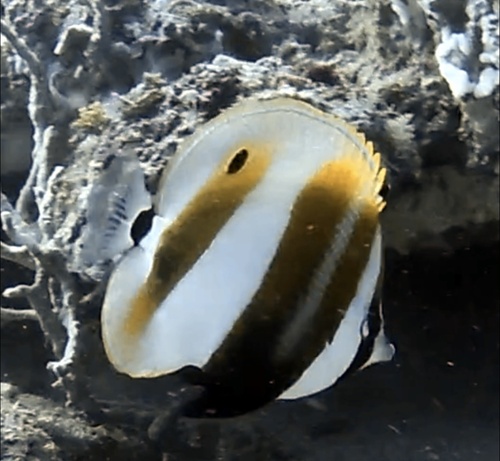
Orangebanded Coralfish Coradion chrysozonus A butterflyfish with a bright orange vertical band across its body and a black band through the eye. It has a tall, oval-shaped body.to 15 cm · 5-30 m · by daycoral-rich slopes and drop-offsOften seen singly or in pairs; look for it near soft corals and gorgonian fans. no rights reserved · CC0 · observation
Blacklip Butterflyfish (Chaetodon kleinii)
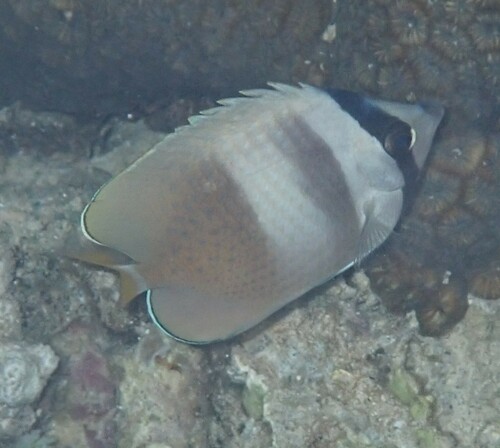
Blacklip Butterflyfish Chaetodon kleinii A pale yellow butterflyfish with a black bar through the eye, a black spot on the dorsal fin, and a distinctive black margin on the lips.to 15 cm · 3-30 m · by daycoral-rich areas of reefs and lagoonsOften seen in pairs or small groups, moving quickly between coral heads to feed on polyps. (c) Jan Ebr & Ivana Ebrová, some rights reserved (CC BY) · observation
Redshoulder Wrasse (Stethojulis bandanensis)
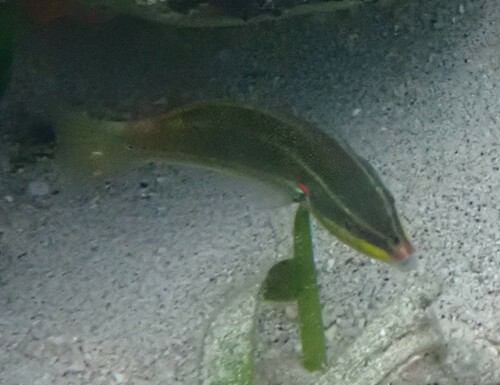
Redshoulder Wrasse Stethojulis bandanensis A slender wrasse with a distinctive red patch on the upper shoulder, often seen darting over reef flats and slopes.to 15 cm · 1-30 m · by daycoral-rich areas and rubble patches on reef flats and slopesWatch for a quick, solitary fish foraging over the reef; the red shoulder flash is most visible from above. (c) Jan Ebr & Ivana Ebrová, some rights reserved (CC BY) · observation