Home › Dive Sites › Indonesia › Lombok › Alang Alang Wall

Alang Alang Wall

📍 Lombok, Indonesia

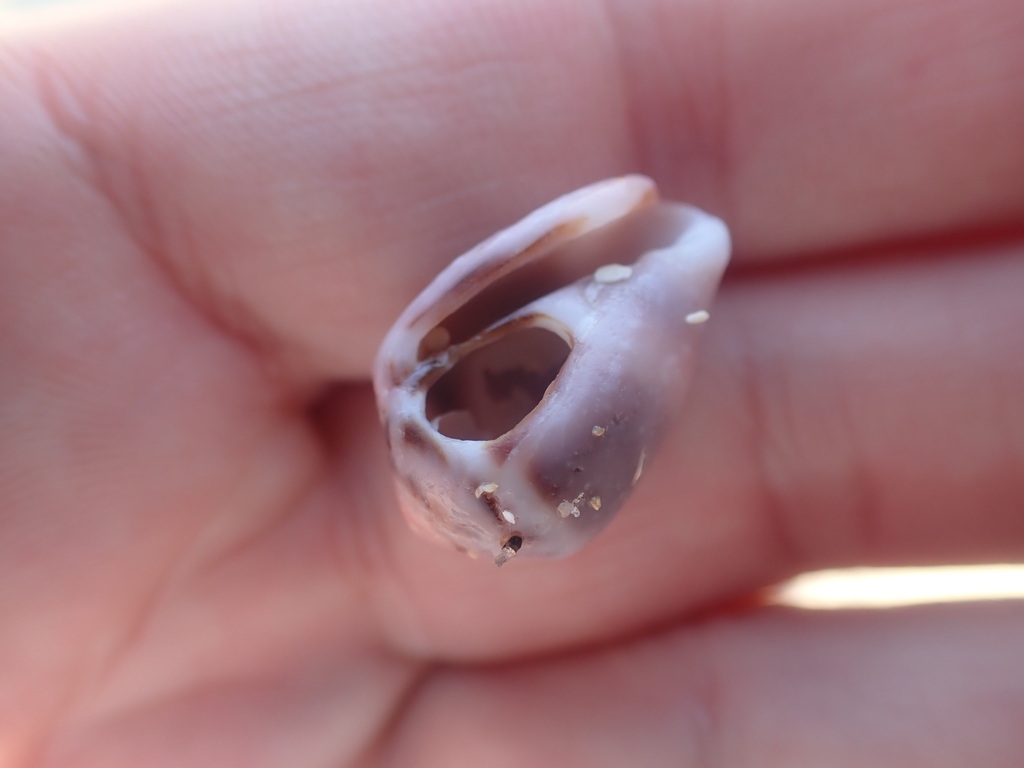
Coronated Cone (Conus coronatus) — recorded at Alang Alang Wall

Alang Alang Wall is a dive site in Lombok, Indonesia. The site has a wall. The sea floor at the site position lies at about 11 meters. Currents typically run at 2.1 km/h and reach 3.5 km/h on the strongest days. Water temperatures range from 28°C in August to 30°C in November. The typical daily tidal range is about 1.3 m. Species recorded in the area include Coronated Cone, Blue Knee Hermit Crab, Almond Ark, Striped Surgeonfish and Bear-like Hermit Crab.

Dive Conditions

⬇️
Seabed Depth
11m
💨
Current
2.1 km/h (3.5)
🌡️
Water Temp
28–30 °C

🤿 Book a Diving Tour in Alang Alang Wall

Tours powered by GetYourGuide. FindADive may earn a commission on bookings.

Typical Current 2.1 km/h (up to 3.5)
Seabed Depth 11 m
Water Temperature 28–30 °C
Tidal Range 1.3 m (typical daily)
GPS -8.5211°, 116.0427°

Data sources: currents and water temperature from Open-Meteo Marine (CC BY 4.0), hourly model values 2024; seabed depth from the GEBCO 2020 Grid, sampled at the site coordinates (grid resolution about 450 m). Tidal range is the median daily range of modelled sea level from Open-Meteo Marine, hourly values 2024. Species observations from iNaturalist, checked against the World Register of Marine Species.

Conditions at Alang Alang Wall through the year

Sea surface temperature at the site coordinates, averaged per month from hourly model values for 2024. The water is warmest in November at about 30 °C and coolest in August at about 28 °C, a spread of 2.1 degrees across the year.

Monthly sea surface temperature at Alang Alang Wall (°C)
JanFebMarAprMayJunJulAugSepOctNovDec
29.4 29.3 29.7 30.1 29.8 29.0 28.6 28.1 28.5 29.1 30.2 29.9

Ocean current at the site runs at a typical 2.1 km/h. In the strongest tenth of the hours modelled for 2024 it reaches 3.5 km/h, which is when entries are normally timed to slack water at the turn of the tide.

The tide moves the water level by a median 1.3 m over a day, and by up to 1.8 m on the largest days of the month. That range drives how much water is exchanged over the reef and when the current turns.

In the open sea off Alang Alang Wall, the highest wave of the day exceeded 1.5 m on 2.0 % of days between 2015 and 2024. The roughest month was July (5 % of days), the calmest April (0 %).

Share of days with waves above 1.5 m, open sea near Alang Alang Wall (%, 2015–2024)
JanFebMarAprMayJunJulAugSepOctNovDec
223014541101

The seabed directly under the site coordinates sits at about 11 m. This is a bathymetry grid value with a cell size of roughly 450 m, so it describes the depth of the area rather than the deepest point a dive can reach.

How Alang Alang Wall compares

These comparisons use only the measured values above, set against the 376 dive sites published on findadive.com. A percentage shows the share of other sites with a lower (or higher) value, so it reads the same way wherever the site is.

Alang Alang Wall compared with all listed sites and with Lombok
MeasureThis siteCompared with all sitesMedian in Lombok
Mean water temperature29.3 °Ccooler than 64 % of the other 375 sites29.4 °C (44 sites)
Water temperature in the coolest month28.1 °Ccooler than 54 % of the other 375 sites28.2 °C (44 sites)
Typical current2.1 km/hstronger than 66 % of the other 375 sites1.8 km/h (44 sites)
Current in the strongest 10 % of hours3.5 km/hstronger than 63 % of the other 375 sites3.2 km/h (44 sites)
Median daily tidal range1.3 msmaller than 62 % of the other 375 sites1.2 m (44 sites)

Water temperature, current and tide from Open-Meteo Marine (CC BY 4.0), hourly model values for 2024 at -8.5211°, 116.0427°. Seabed depth from the GEBCO 2020 Grid. Wave statistics from ERA5-Ocean via Open-Meteo Marine (contains modified Copernicus Climate Change Service information 2015–2024), daily maximum wave height on a 0.5° grid; land shelter tested against Natural Earth coastlines.

Marine life recorded at this site

Research-grade observations from iNaturalist within about 12 km of these coordinates.

Coronated Cone (Conus coronatus)
Coronated Cone Conus coronatus A small cone snail with a coronated spire, its shell is patterned with brown and white bands and rows of tiny nodules.to 4 cm · intertidal-10 m · at nightsandy and rubble areas on reef flats and lagoonsLook for its shell partially buried in sand or rubble during the day; it emerges at night to hunt. (c) Kelvin Perrie, some rights reserved (CC BY) · observation
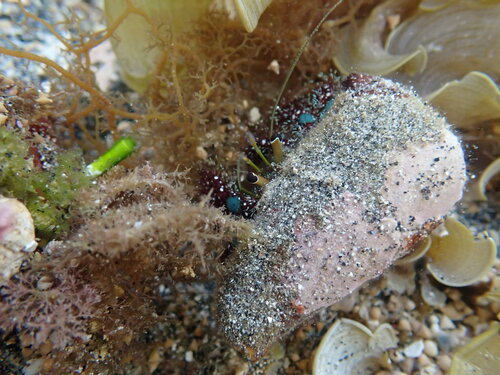
Blue Knee Hermit Crab (Dardanus guttatus)
Blue Knee Hermit Crab Dardanus guttatus A hermit crab with bright blue bands on its walking legs, which are visible when it emerges from its shell. It carries a sea anemone on its shell for defence.to 5 cm · 1-30 m · day and nightsandy and rubble areas, often near reefsLook for movement on the sand at night; a torch beam will make the blue bands on its legs stand out clearly. (c) Kelvin Perrie, some rights reserved (CC BY) · observation
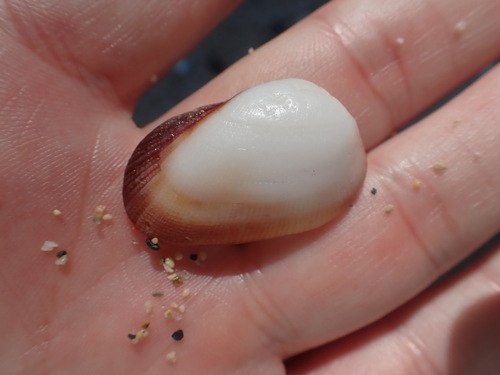
Almond Ark (Barbatia amygdalumtostum)
Almond Ark Barbatia amygdalumtostum A small bivalve with a dark, roughly textured shell, often found in clusters attached to hard surfaces.to 4 cm · 5-25 m · day and nightattached to rocks, coral rubble, or under ledgesLook for dark, fuzzy patches on reef surfaces; these are often dense colonies of this ark shell. (c) Kelvin Perrie, some rights reserved (CC BY) · observation
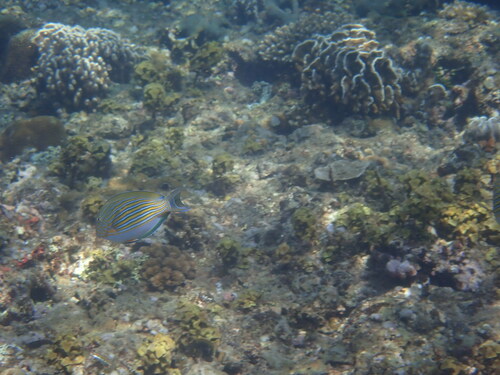
Striped Surgeonfish (Acanthurus lineatus)
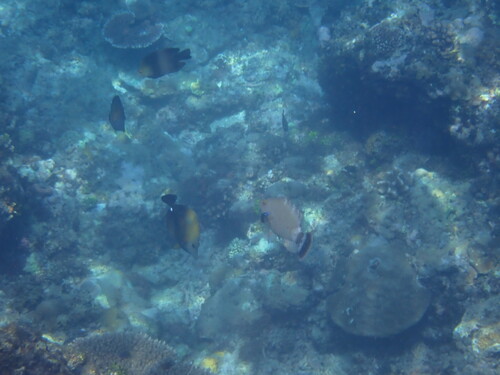
Striped Surgeonfish Acanthurus lineatus A brightly striped surgeonfish with alternating blue and yellow horizontal lines on the body and a sharp, retractable spine near the tail.to 38 cm · 1-15 m · by dayshallow, turbulent surge zones on outer reef crestsOften seen in small groups grazing on algae; the tail spine is a defensive weapon, so avoid approaching too closely from behind. (c) Kelvin Perrie, some rights reserved (CC BY) · observation
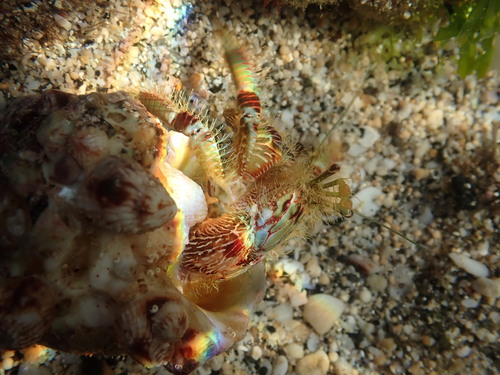
Bear-like Hermit Crab (Aniculus ursus)
Bear-like Hermit Crab Aniculus ursus A large hermit crab with a hairy, reddish-brown body and robust claws, often seen moving across the reef or sand.to 10 cm · intertidal-30 m · at nightreef flats, rubble zones, and sandy patchesLook for its movement at night with a torch; it often freezes when illuminated, making observation easier. (c) Kelvin Perrie, some rights reserved (CC BY) · observation
Tripletail Maori Wrasse (Cheilinus trilobatus)
Tripletail Maori Wrasse Cheilinus trilobatus A medium-sized wrasse with a deep body, a prominent hump on the head in adults, and three dark lobes on its tail fin.to 45 cm · 1-30 m · by daycoral-rich areas of lagoons and seaward reefsOften solitary and wary; approach slowly from a distance, as it may retreat into coral cover if startled. (c) Kelvin Perrie, some rights reserved (CC BY) · observation
Chain-link Brittle Star (Ophiomastix annulosa)
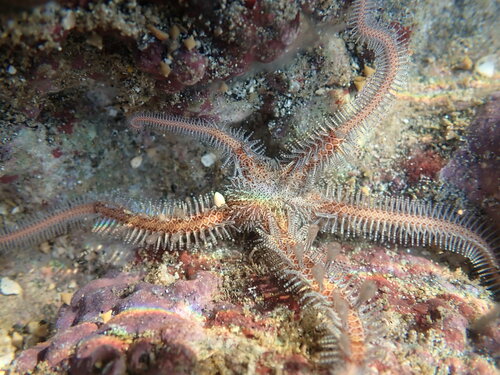
Chain-link Brittle Star Ophiomastix annulosa A brittle star with long, banded arms that are often held in a coiled or tangled posture, resembling a chain.to 30 cm armspan · 5-30 m · at nightcoral rubble, under rocks, on reef slopesLook under loose coral pieces or rocks during a night dive; it often hides by day. (c) Kelvin Perrie, some rights reserved (CC BY) · observation
Rudman's Phyllidiella (Phyllidiella rudmani)
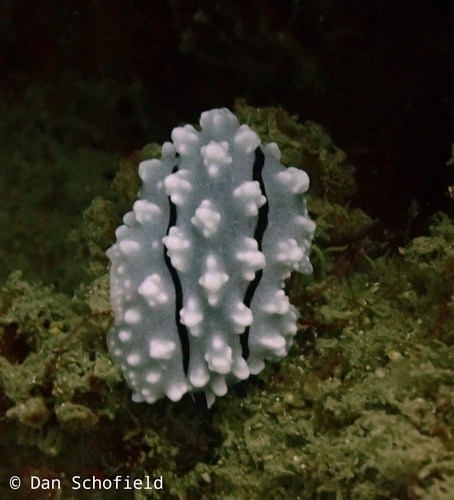
Rudman's Phyllidiella Phyllidiella rudmani A nudibranch with a black body covered in large, pale pink tubercles, often arranged in rows. It has a pink margin and rhinophores.to 6 cm · 5-30 m · day and nightcoral and rocky reefs, often on spongesLook for its distinctive pink and black pattern on reef slopes and walls, especially near its sponge prey. (c) Dan Schofield, some rights reserved (CC BY) · observation