Home › Dive Sites › Indonesia › Raja Ampat › Quoy Rocks

Quoy Rocks

📍 Raja Ampat, Indonesia

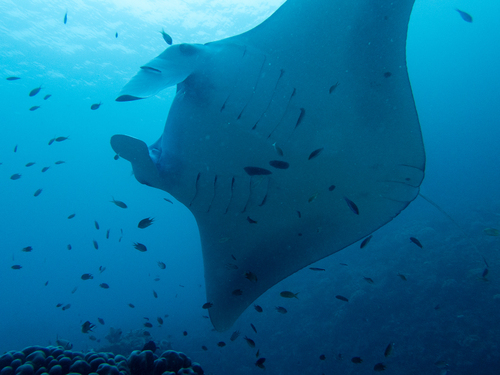
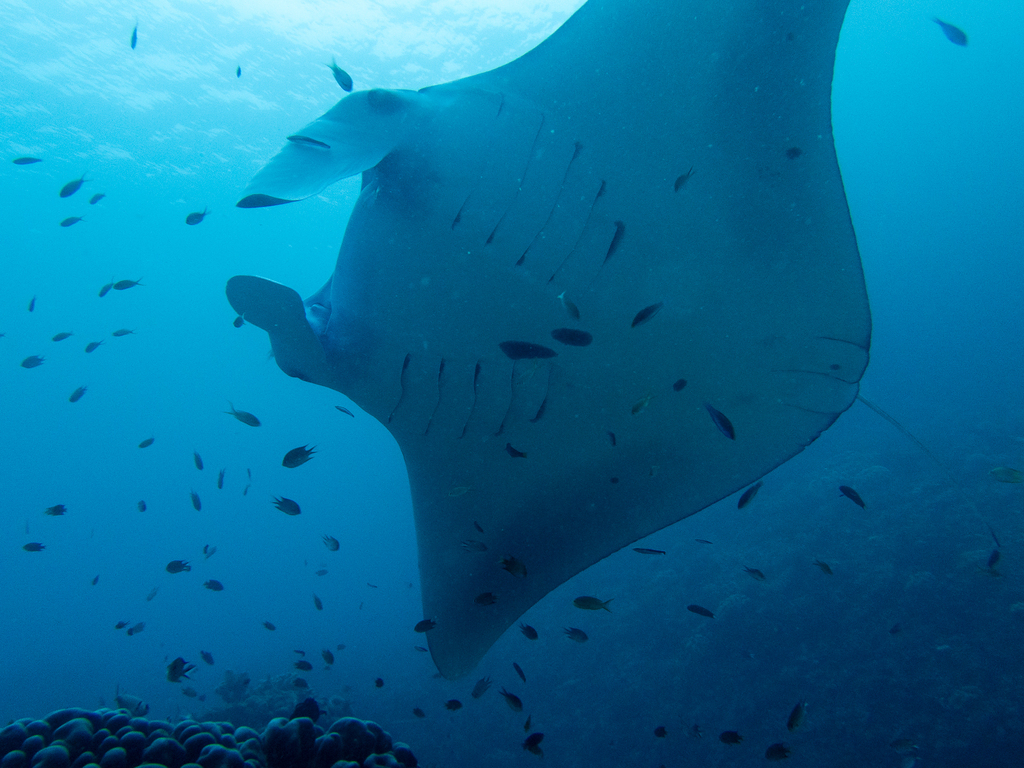
Reef Manta Ray (Mobula alfredi) - recorded at Quoy Rocks

Quoy Rocks is a dive site in Raja Ampat, Indonesia. Currents typically run at 2.7 km/h and reach 5.5 km/h on the strongest days. Water temperatures range from 29°C in February to 31°C in November. The typical daily tidal range is about 1.1 m. Species recorded in the area include Reef Manta Ray, Ribbon Sweetlips, Barred Soapfish, Pacific Trumpetfish and Clown Triggerfish.

Dive Conditions

💨
Current
2.7 km/h (5.5)
🌡️
Water Temp
29–31 °C

🐠 Marine Life at This Dive Site

Reef Manta Ray — seen at this dive site
Reef Manta Ray Mobula alfredi (c) Piotr Lukasik, some rights reserved (CC BY)
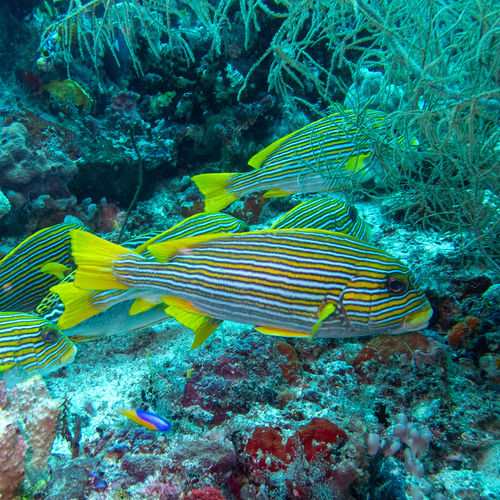
Ribbon Sweetlips — seen at this dive site
Ribbon Sweetlips Plectorhinchus polytaenia (c) Piotr Lukasik, some rights reserved (CC BY)
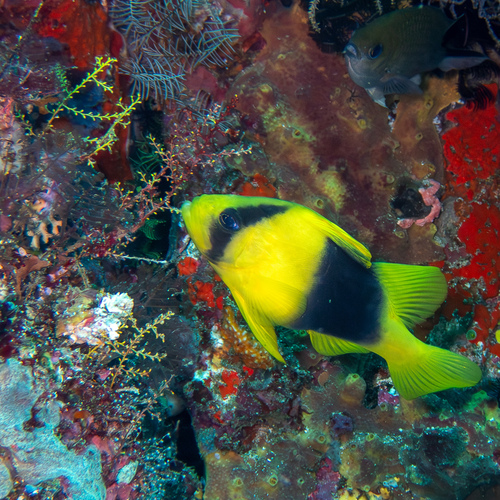
Barred Soapfish — seen at this dive site
Barred Soapfish Diploprion bifasciatus (c) Piotr Lukasik, some rights reserved (CC BY)
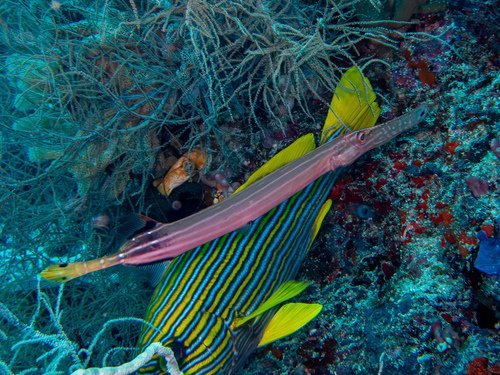
Pacific Trumpetfish — seen at this dive site
Pacific Trumpetfish Aulostomus chinensis (c) Piotr Lukasik, some rights reserved (CC BY)
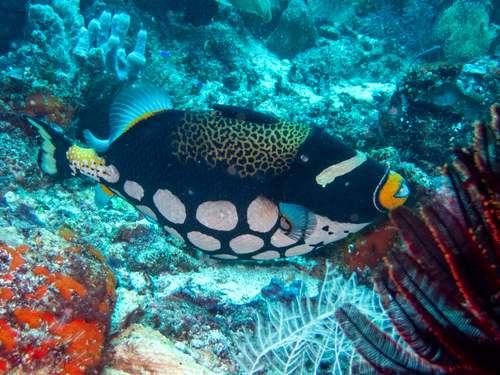
Clown Triggerfish — seen at this dive site
Clown Triggerfish Balistoides conspicillum (c) Piotr Lukasik, some rights reserved (CC BY)
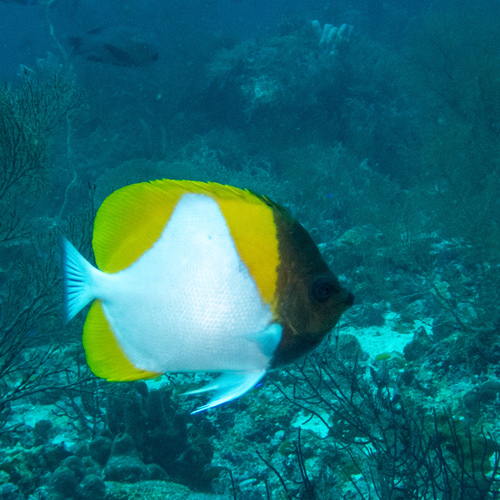
Pyramid Butterflyfish — seen at this dive site
Pyramid Butterflyfish Hemitaurichthys polylepis (c) Piotr Lukasik, some rights reserved (CC BY)

Species data from iNaturalist (CC BY-NC)

🤿 Book a Diving Tour in Quoy Rocks

Tours powered by GetYourGuide. FindADive may earn a commission on bookings.

Typical Current 2.7 km/h (up to 5.5)
Water Temperature 29–31 °C
Tidal Range 1.1 m (typical daily)
GPS 0.1238°, 130.1449°

Data sources: currents and water temperature from Open-Meteo Marine (CC BY 4.0), hourly model values 2024. Tidal range is the median daily range of modelled sea level from Open-Meteo Marine, hourly values 2024. Species observations from iNaturalist, checked against the World Register of Marine Species.

Conditions at Quoy Rocks through the year

Sea surface temperature at the site coordinates, averaged per month from hourly model values for 2024. The water is warmest in November at about 31 °C and coolest in February at about 29 °C, a spread of 1.1 degrees across the year.

Monthly sea surface temperature at Quoy Rocks (°C)
JanFebMarAprMayJunJulAugSepOctNovDec
29.8 29.4 29.8 30.2 30.2 30.2 29.9 29.8 29.8 30.1 30.5 30.3

Ocean current at the site runs at a typical 2.7 km/h. In the strongest tenth of the hours modelled for 2024 it reaches 5.5 km/h, which is when entries are normally timed to slack water at the turn of the tide.

The tide moves the water level by a median 1.1 m over a day, and by up to 1.5 m on the largest days of the month. That range drives how much water is exchanged over the reef and when the current turns.

In the open sea off Quoy Rocks, the highest wave of the day exceeded 1.5 m on 1.5 % of days between 2015 and 2024. The roughest month was February (5 % of days), the calmest May (0 %).

Share of days with waves above 1.5 m, open sea near Quoy Rocks (%, 2015–2024)
JanFebMarAprMayJunJulAugSepOctNovDec
350001331001

How Quoy Rocks compares

These comparisons use only the measured values above, set against the 351 dive sites published on findadive.com. A percentage shows the share of other sites with a lower (or higher) value, so it reads the same way wherever the site is. Quoy Rocks sits with its mean water temperature in the top tenth and its coolest-month water temperature in the top tenth of all listed sites.

Quoy Rocks compared with all listed sites and with Raja Ampat
MeasureThis siteCompared with all sitesMedian in Raja Ampat
Mean water temperature30.0 °Cwarmer than 98 % of the other 350 sites29.9 °C (11 sites)
Water temperature in the coolest month29.4 °Cwarmer than 98 % of the other 350 sites29.4 °C (11 sites)
Typical current2.7 km/hstronger than 80 % of the other 350 sites1.8 km/h (11 sites)
Current in the strongest 10 % of hours5.5 km/hstronger than 80 % of the other 350 sites3.5 km/h (11 sites)
Median daily tidal range1.1 msmaller than 96 % of the other 350 sites1.1 m (11 sites)

Water temperature, current and tide from Open-Meteo Marine (CC BY 4.0), hourly model values for 2024 at 0.1238°, 130.1449°. Wave statistics from ERA5-Ocean via Open-Meteo Marine (contains modified Copernicus Climate Change Service information 2015–2024), daily maximum wave height on a 0.5° grid; land shelter tested against Natural Earth coastlines.

Marine life recorded at this site

Research-grade observations from iNaturalist within about 12 km of these coordinates.
Reef Manta Ray (Mobula alfredi)
Reef Manta Ray Mobula alfredi A large, flat ray with a dark grey to black upper side and white underside, often with distinctive shoulder patches. It swims by flapping its wing-like pectoral fins.to 5.5 m wingspan · surface to 30 m · day and nightnear coral reefs, cleaning stations, and channelsObserve from a distance at cleaning stations; mantas will circle the area repeatedly, allowing for extended viewing. (c) Piotr Lukasik, some rights reserved (CC BY) · observation
Ribbon Sweetlips (Plectorhinchus polytaenia)
Ribbon Sweetlips Plectorhinchus polytaenia (c) Piotr Lukasik, some rights reserved (CC BY) · observation
Barred Soapfish (Diploprion bifasciatus)
Barred Soapfish Diploprion bifasciatus A bright yellow fish with two broad black vertical bars, one through the eye and one behind the pectoral fin. It often hovers motionless.to 25 cm · 5-40 m · day and nightcaves, ledges, and overhangs on coral reefsLook for a solitary, still yellow shape in the shadows of reef structures; it may retreat if approached directly. (c) Piotr Lukasik, some rights reserved (CC BY) · observation
Pacific Trumpetfish (Aulostomus chinensis)
Pacific Trumpetfish Aulostomus chinensis A slender, elongated fish that often hovers vertically among branching corals or swims slowly, sometimes shadowing larger fish.to 80 cm · 1-30 m · by daycoral reefs and seagrass bedsLook for its motionless vertical posture near coral heads, or watch for it swimming close behind large parrotfish or groupers. (c) Piotr Lukasik, some rights reserved (CC BY) · observation
Clown Triggerfish (Balistoides conspicillum)
Clown Triggerfish Balistoides conspicillum A bold triggerfish with a black body, large white spots on the lower half, and a bright yellow mouth and fin markings.to 50 cm · 1-75 m · by dayreef slopes and drop-offs, often near cavesObserve from a distance; it can be territorial and will often retreat into a crevice if approached too closely. (c) Piotr Lukasik, some rights reserved (CC BY) · observation
Pyramid Butterflyfish (Hemitaurichthys polylepis)
Pyramid Butterflyfish Hemitaurichthys polylepis A butterflyfish with a bright white pyramid-shaped patch on its side, contrasting with a dark brown body and yellow fins.to 18 cm · 3-60 m · by dayouter reef slopes and channels with strong currentsOften seen in large aggregations feeding on plankton high in the water column above the reef. (c) Piotr Lukasik, some rights reserved (CC BY) · observation
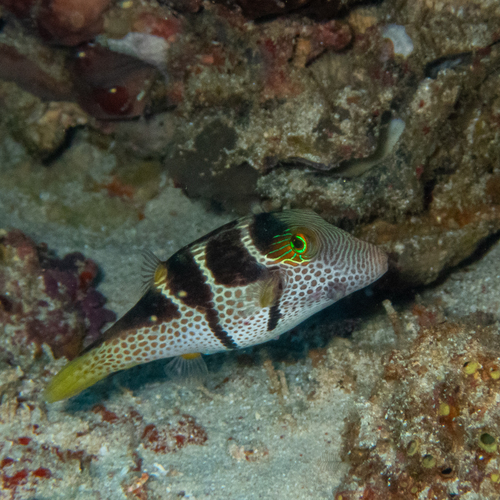
Blacksaddle Toby (Canthigaster valentini)
Blacksaddle Toby Canthigaster valentini A small pufferfish with a white body marked by dark saddles and numerous blue lines radiating from the eyes. It often hovers near the reef.to 11 cm · 1-30 m · by daylagoon and seaward reefs, often near coral or rubbleLook for it alone or in small groups; it may retreat into crevices if approached too quickly. (c) Piotr Lukasik, some rights reserved (CC BY) · observation
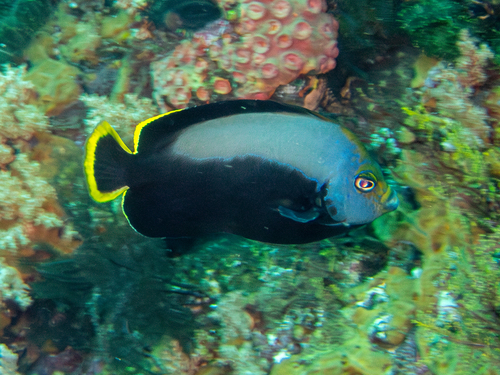
Black Velvet Angelfish (Chaetodontoplus melanosoma)
Black Velvet Angelfish Chaetodontoplus melanosoma (c) Piotr Lukasik, some rights reserved (CC BY) · observation