Ridge Rock
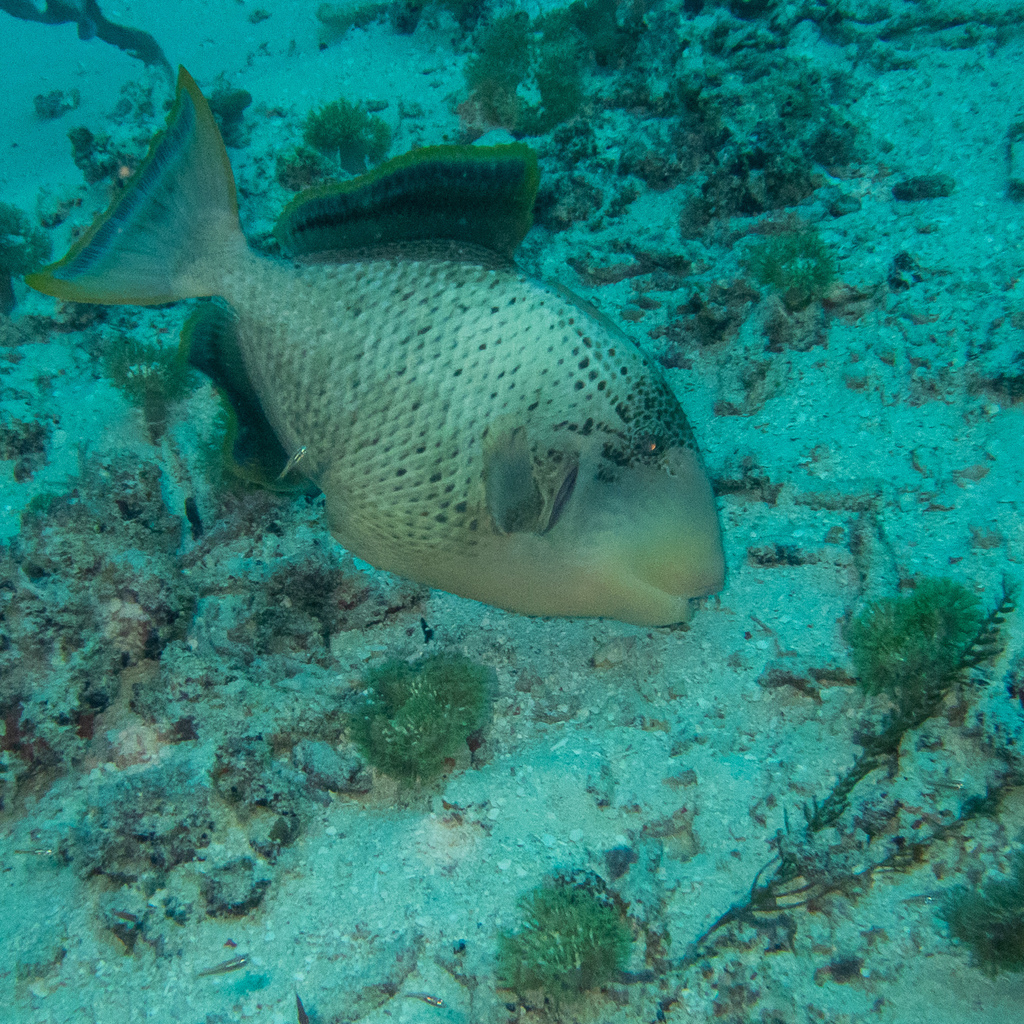
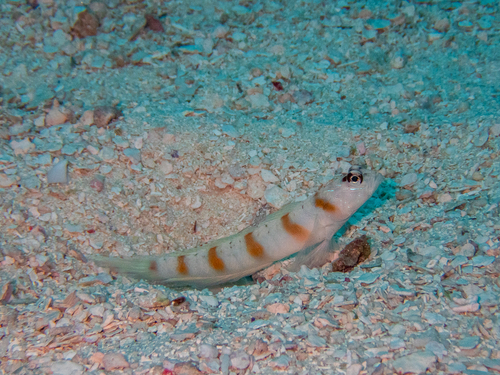
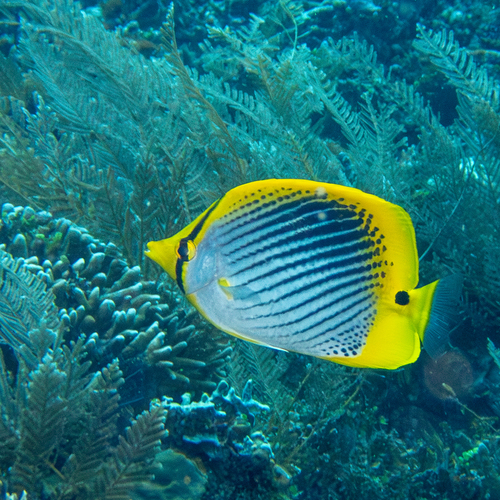
Ridge Rock is a dive site in Raja Ampat, Indonesia. The sea floor at the site position lies at about 30 meters. Currents typically run at 2.4 km/h and reach 4.8 km/h on the strongest days. Water temperatures range from 29°C in February to 31°C in November. The typical daily tidal range is about 1.1 m. Species recorded in the area include Whitestreak Monocle Bream, Yellowmargin Triggerfish, Harlequin Sweetlips, Foxface and Spotbanded Butterflyfish.
Dive Conditions
🐠 Marine Life at This Dive Site
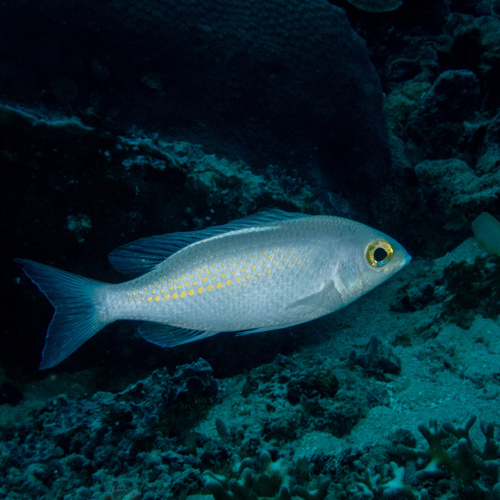
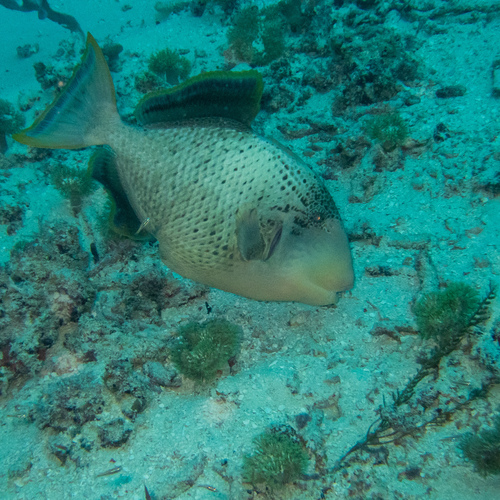
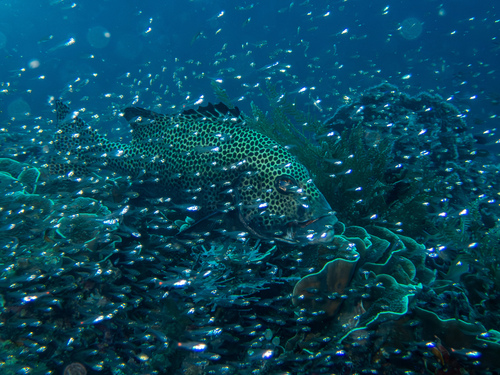
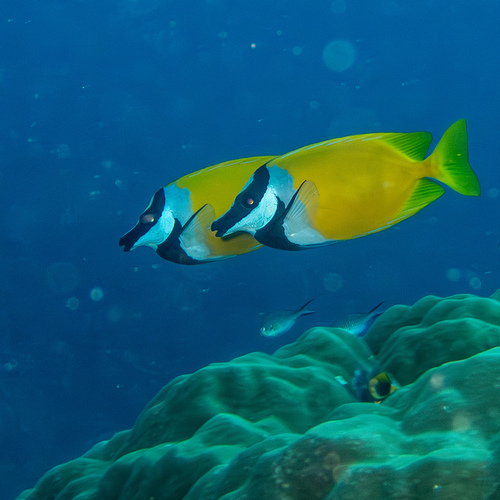
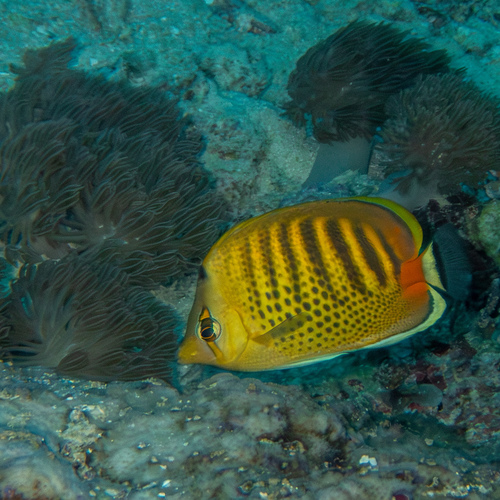
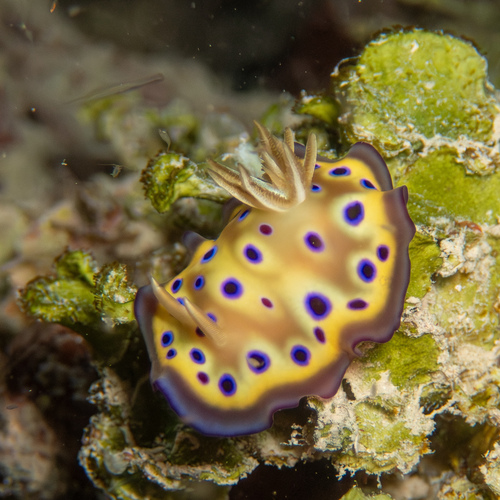
Species data from iNaturalist (CC BY-NC)
Data sources: currents and water temperature from Open-Meteo Marine (CC BY 4.0), hourly model values 2024; seabed depth from the GEBCO 2020 Grid, sampled at the site coordinates (grid resolution about 450 m). Tidal range is the median daily range of modelled sea level from Open-Meteo Marine, hourly values 2024. Species observations from iNaturalist, checked against the World Register of Marine Species.
Conditions at Ridge Rock through the year
Sea surface temperature at the site coordinates, averaged per month from hourly model values for 2024. The water is warmest in November at about 31 °C and coolest in February at about 29 °C, a spread of 1.1 degrees across the year.
| Jan | Feb | Mar | Apr | May | Jun | Jul | Aug | Sep | Oct | Nov | Dec |
|---|---|---|---|---|---|---|---|---|---|---|---|
| 29.8 | 29.4 | 29.8 | 30.2 | 30.2 | 30.2 | 29.9 | 29.9 | 29.8 | 30.1 | 30.5 | 30.3 |
Ocean current at the site runs at a typical 2.4 km/h. In the strongest tenth of the hours modelled for 2024 it reaches 4.8 km/h, which is when entries are normally timed to slack water at the turn of the tide.
The tide moves the water level by a median 1.1 m over a day, and by up to 1.4 m on the largest days of the month. That range drives how much water is exchanged over the reef and when the current turns.
In the open sea off Ridge Rock, the highest wave of the day exceeded 1.5 m on 1.5 % of days between 2015 and 2024. The roughest month was February (5 % of days), the calmest May (0 %).
| Jan | Feb | Mar | Apr | May | Jun | Jul | Aug | Sep | Oct | Nov | Dec |
|---|---|---|---|---|---|---|---|---|---|---|---|
| 3 | 5 | 0 | 0 | 0 | 1 | 3 | 3 | 1 | 0 | 0 | 1 |
The seabed directly under the site coordinates sits at about 30 m. This is a bathymetry grid value with a cell size of roughly 450 m, so it describes the depth of the area rather than the deepest point a dive can reach.
How Ridge Rock compares
These comparisons use only the measured values above, set against the 351 dive sites published on findadive.com. A percentage shows the share of other sites with a lower (or higher) value, so it reads the same way wherever the site is. Ridge Rock sits with its mean water temperature in the top tenth and its coolest-month water temperature in the top tenth of all listed sites.
| Measure | This site | Compared with all sites | Median in Raja Ampat |
|---|---|---|---|
| Mean water temperature | 30.0 °C | warmer than 98 % of the other 350 sites | 29.9 °C (11 sites) |
| Water temperature in the coolest month | 29.4 °C | warmer than 98 % of the other 350 sites | 29.4 °C (11 sites) |
| Typical current | 2.4 km/h | stronger than 73 % of the other 350 sites | 1.8 km/h (11 sites) |
| Current in the strongest 10 % of hours | 4.8 km/h | stronger than 77 % of the other 350 sites | 3.5 km/h (11 sites) |
| Median daily tidal range | 1.1 m | smaller than 97 % of the other 350 sites | 1.1 m (11 sites) |
Water temperature, current and tide from Open-Meteo Marine (CC BY 4.0), hourly model values for 2024 at 0.1629°, 130.0130°. Seabed depth from the GEBCO 2020 Grid. Wave statistics from ERA5-Ocean via Open-Meteo Marine (contains modified Copernicus Climate Change Service information 2015–2024), daily maximum wave height on a 0.5° grid; land shelter tested against Natural Earth coastlines.
Marine life recorded at this site
Research-grade observations from iNaturalist within about 12 km of these coordinates.