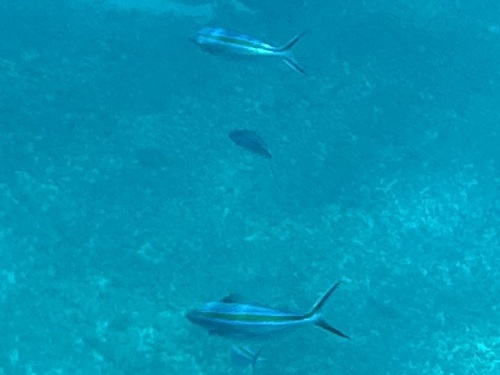
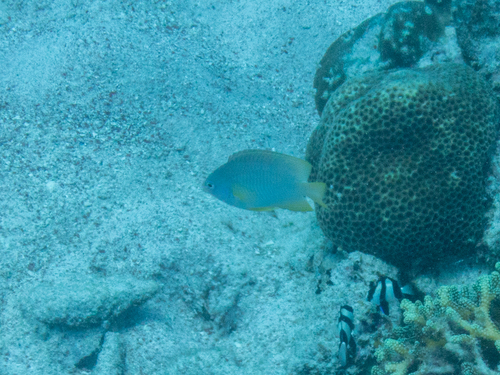
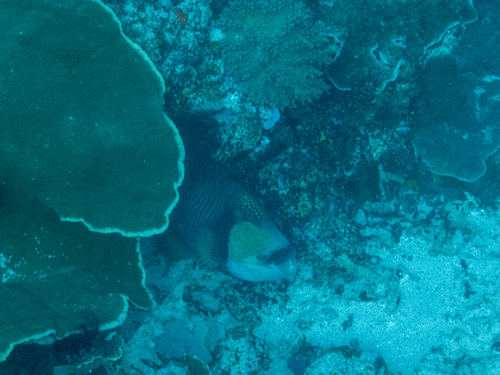
Siaba Besar / Turtle Point
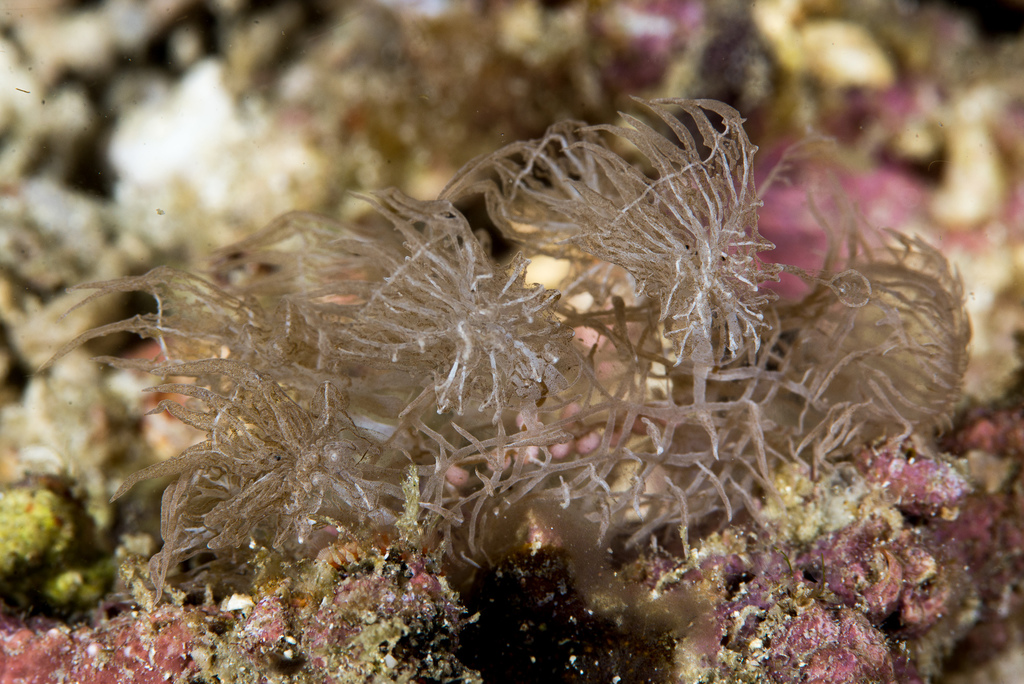
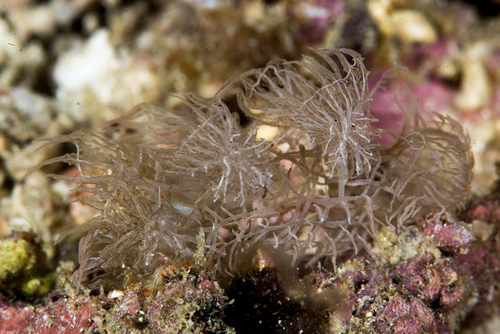
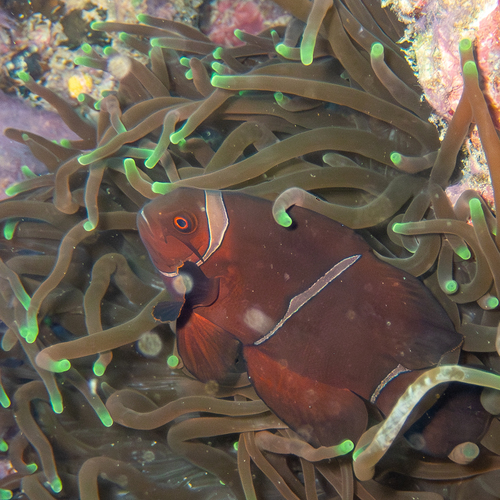
Siaba Besar / Turtle Point is a dive site in Komodo, Indonesia. It lies within the Komodo National Park. The sea floor at the site position lies at about 48 meters. Currents typically run at 3.2 km/h and reach 5.8 km/h on the strongest days. Water temperatures range from 28°C in August to 30°C in November. The typical daily tidal range is about 1.3 m. Species recorded in the area include Nasal-flap moray, Melibe colemani, Spine-cheek Clownfish, Three-spot Dascyllus and Sixband Angelfish.
Dive Conditions
Data sources: currents and water temperature from Open-Meteo Marine (CC BY 4.0), hourly model values 2024; seabed depth from the GEBCO 2020 Grid, sampled at the site coordinates (grid resolution about 450 m). Tidal range is the median daily range of modelled sea level from Open-Meteo Marine, hourly values 2024. Protected area boundary from OpenStreetMap contributors (ODbL). Species observations from iNaturalist, checked against the World Register of Marine Species.
Conditions at Siaba Besar / Turtle Point through the year
Sea surface temperature at the site coordinates, averaged per month from hourly model values for 2024. The water is warmest in November at about 30 °C and coolest in August at about 28 °C, a spread of 2.2 degrees across the year.
| Jan | Feb | Mar | Apr | May | Jun | Jul | Aug | Sep | Oct | Nov | Dec |
|---|---|---|---|---|---|---|---|---|---|---|---|
| 28.4 | 28.4 | 29.0 | 29.5 | 29.3 | 28.6 | 28.1 | 27.9 | 28.2 | 28.9 | 30.1 | 29.5 |
Ocean current at the site runs at a typical 3.2 km/h. In the strongest tenth of the hours modelled for 2024 it reaches 5.8 km/h, which is when entries are normally timed to slack water at the turn of the tide.
The tide moves the water level by a median 1.3 m over a day, and by up to 1.8 m on the largest days of the month. That range drives how much water is exchanged over the reef and when the current turns.
In the open sea off Siaba Besar / Turtle Point, the highest wave of the day exceeded 1.5 m on 0.8 % of days between 2015 and 2024. The roughest month was January (5 % of days), the calmest April (0 %). Land within 10 km blocks some of the directions these waves come from (open to about 71 % of them), so conditions at the site are likely calmer than these open-sea values.
| Jan | Feb | Mar | Apr | May | Jun | Jul | Aug | Sep | Oct | Nov | Dec |
|---|---|---|---|---|---|---|---|---|---|---|---|
| 5 | 1 | 1 | 0 | 0 | 0 | 0 | 0 | 0 | 0 | 0 | 2 |
The seabed directly under the site coordinates sits at about 48 m. This is a bathymetry grid value with a cell size of roughly 450 m, so it describes the depth of the area rather than the deepest point a dive can reach.
Siaba Besar / Turtle Point lies inside Komodo National Park. Protected areas can carry their own rules on entry fees, permits, anchoring and fishing; check the current rules with a local operator before you dive.
How Siaba Besar / Turtle Point compares
These comparisons use only the measured values above, set against the 376 dive sites published on findadive.com. A percentage shows the share of other sites with a lower (or higher) value, so it reads the same way wherever the site is.
| Measure | This site | Compared with all sites | Median in Komodo |
|---|---|---|---|
| Mean water temperature | 28.8 °C | cooler than 84 % of the other 375 sites | 28.8 °C (68 sites) |
| Water temperature in the coolest month | 27.9 °C | cooler than 74 % of the other 375 sites | 27.9 °C (68 sites) |
| Typical current | 3.2 km/h | stronger than 85 % of the other 375 sites | 1.2 km/h (68 sites) |
| Current in the strongest 10 % of hours | 5.8 km/h | stronger than 85 % of the other 375 sites | 2.7 km/h (68 sites) |
| Median daily tidal range | 1.3 m | smaller than 60 % of the other 375 sites | 1.5 m (68 sites) |
Water temperature, current and tide from Open-Meteo Marine (CC BY 4.0), hourly model values for 2024 at -8.5449°, 119.6463°. Seabed depth from the GEBCO 2020 Grid. Protected area boundary from OpenStreetMap contributors (ODbL). Wave statistics from ERA5-Ocean via Open-Meteo Marine (contains modified Copernicus Climate Change Service information 2015–2024), daily maximum wave height on a 0.5° grid; land shelter tested against Natural Earth coastlines.
Marine life recorded at this site
Research-grade observations from iNaturalist within about 12 km of these coordinates.