Master Diving Center
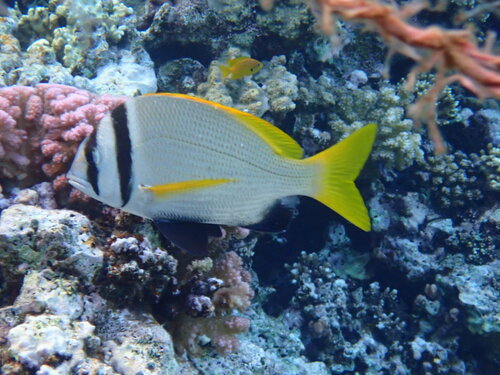
Photo: Alexander Popovkin · CC0 · via iNaturalist
Master Diving Center is a PADI 5* dive center located in Hurghada, Egypt, on the Red Sea. It offers a wide range of PADI courses, from introductory programs like Bubblemaker and Discover Scuba Diving to professional-level training such as the Divemaster Course. The center also runs fun dives for certified divers and is suitable for beginners through advanced divers.
Courses offered
| Course | Price |
|---|---|
| PADI Bubblemaker | – |
| PADI Open Water Diver Course | – |
| PADI Advanced Open Water Diver Course | – |
| PADI Divemaster Course | – |
| PADI Discover Scuba Diving Course | – |
| PADI Deep Diver Specialty | – |
| PADI Drift Diver Specialty | – |
| Emergency First Response Course (EFR) | – |
| PADI Junior Open Water Diver Course | – |
| Junior scuba diver | – |
| PADI Night Diver Specialty | – |
| PADI ReActivate Scuba Refresher Program | – |
| PADI Rescue Diver Course | – |
| Scuba diver | – |
| PADI Digital Underwater Photographer Specialty | – |
| PADI Enriched Air Diver (Nitrox) Specialty | – |
| PADI Sidemount Diver Specialty | – |
| PADI Wreck Diver Specialty | – |
Diving with Master Diving Center
The center has its own exclusive house reef and boats depart daily from the marina in Hurghada. Diving is conducted in English, and nitrox is available for enriched air divers. Dive sites visited include the Thistlegorm, Salem Express, Marsa Alam, and Makadi Bay.
On Google it holds an average rating of 4.8 from 698 reviews.
Sea temperatures in the surrounding waters range from 28°C in January to 31°C in May.
At a glance
- One of 16 PADI centres listed in Hurghada
- 1 dive sites within 60 km:
Sea temperature through the year
Average sea surface temperature at the coordinates of Master Diving Center, Hurghada, Egypt, by calendar month. The water is warmest in August at 29.7 °C and coldest in February at 22.3 °C, a spread of 7.4 kelvin over the year. 6 of the twelve months average 25 °C or more.
| Month | Jan | Feb | Mar | Apr | May | Jun | Jul | Aug | Sep | Oct | Nov | Dec |
|---|---|---|---|---|---|---|---|---|---|---|---|---|
| Sea temperature (°C) | 23.5 | 22.3 | 22.6 | 23.4 | 24.8 | 27.0 | 29.0 | 29.7 | 28.6 | 27.3 | 26.2 | 24.6 |
By season, the four quarterly averages at this location are spring (March to May) 23.6 °C, summer (June to August) 28.6 °C, autumn (September to November) 27.4 °C and winter (December to February) 23.5 °C. The months that average 25 °C or more are June, July, August, September, October and November.
Sea surface temperature from Open-Meteo Marine (CC BY 4.0), daily model means 2022-11 to 2024-12, sampled at the coordinates of this dive centre. Values are monthly averages of the daily means, not forecasts.
Marine life recorded in this area
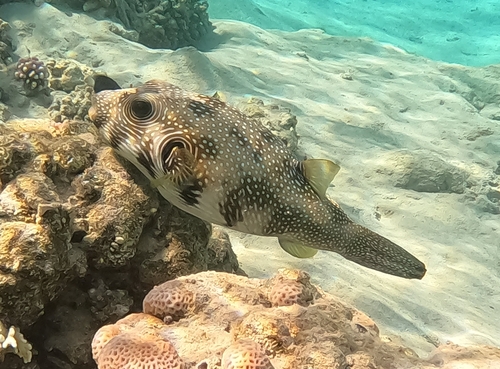
Research-grade observations from iNaturalist near these coordinates.