Home › Dive Sites › Thailand › Stonehenge

Stonehenge

📍 Thailand

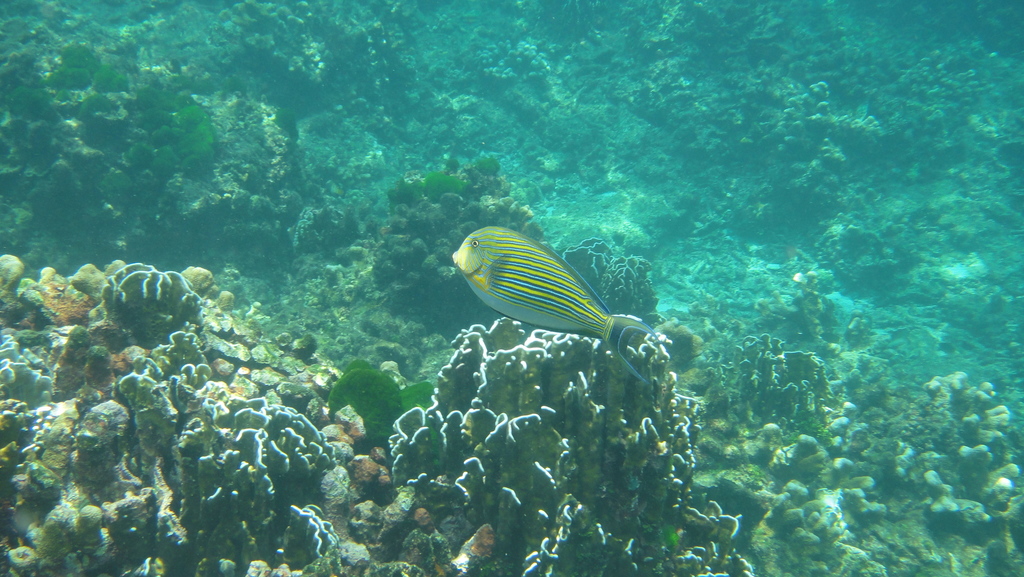
Striped Surgeonfish (Acanthurus lineatus) — recorded at Stonehenge

Stonehenge is a dive site in Thailand. It lies within the Mu Ko Similan National Park. Currents typically run at 0.9 km/h and reach 1.5 km/h on the strongest days. Water temperatures range from 29°C in January to 31°C in May. The typical daily tidal range is about 1.6 m. Species recorded in the area include Striped Surgeonfish, Bicolor Blenny, Lunar Fusilier, Emperor Angelfish and Yellowmargin Triggerfish.

Dive Conditions

💨
Current
0.9 km/h (1.5)
🌡️
Water Temp
29–31 °C

🤿 Book a Diving Tour in Stonehenge

Tours powered by GetYourGuide. FindADive may earn a commission on bookings.

Typical Current 0.9 km/h (up to 1.5)
Water Temperature 29–31 °C
Tidal Range 1.6 m (typical daily)
GPS 8.5785°, 97.6298°

Data sources: currents and water temperature from Open-Meteo Marine (CC BY 4.0), hourly model values 2024. Tidal range is the median daily range of modelled sea level from Open-Meteo Marine, hourly values 2024. Protected area boundary from OpenStreetMap contributors (ODbL). Species observations from iNaturalist, checked against the World Register of Marine Species.

Conditions at Stonehenge through the year

Sea surface temperature at the site coordinates, averaged per month from hourly model values for 2024. The water is warmest in May at about 31 °C and coolest in January at about 29 °C, a spread of 2.2 degrees across the year.

Monthly sea surface temperature at Stonehenge (°C)
JanFebMarAprMayJunJulAugSepOctNovDec
28.9 29.1 29.8 30.7 31.1 29.9 29.4 29.4 28.9 29.4 29.6 29.0

Ocean current at the site runs at a typical 0.9 km/h. In the strongest tenth of the hours modelled for 2024 it reaches 1.5 km/h, which is when entries are normally timed to slack water at the turn of the tide.

The tide moves the water level by a median 1.6 m over a day, and by up to 2.2 m on the largest days of the month. That range drives how much water is exchanged over the reef and when the current turns.

In the open sea off Stonehenge, the highest wave of the day exceeded 1.5 m on 15.0 % of days between 2015 and 2024. The roughest month was August (46 % of days), the calmest March (0 %).

Share of days with waves above 1.5 m, open sea near Stonehenge (%, 2015–2024)
JanFebMarAprMayJunJulAugSepOctNovDec
110116294346291201

Stonehenge lies inside Mu Ko Similan National Park. Protected areas can carry their own rules on entry fees, permits, anchoring and fishing; check the current rules with a local operator before you dive.

How Stonehenge compares

These comparisons use only the measured values above, set against the 376 dive sites published on findadive.com. A percentage shows the share of other sites with a lower (or higher) value, so it reads the same way wherever the site is.

Stonehenge compared with all listed sites and with Thailand
MeasureThis siteCompared with all sitesMedian in Thailand
Mean water temperature29.6 °Cwarmer than 64 % of the other 375 sites29.7 °C (126 sites)
Water temperature in the coolest month28.9 °Cwarmer than 87 % of the other 375 sites28.7 °C (126 sites)
Typical current0.9 km/hweaker than 62 % of the other 375 sites0.7 km/h (126 sites)
Current in the strongest 10 % of hours1.5 km/hweaker than 71 % of the other 375 sites1.3 km/h (126 sites)
Median daily tidal range1.6 mlarger than 65 % of the other 375 sites1.6 m (126 sites)

Water temperature, current and tide from Open-Meteo Marine (CC BY 4.0), hourly model values for 2024 at 8.5785°, 97.6298°. Protected area boundary from OpenStreetMap contributors (ODbL). Wave statistics from ERA5-Ocean via Open-Meteo Marine (contains modified Copernicus Climate Change Service information 2015–2024), daily maximum wave height on a 0.5° grid; land shelter tested against Natural Earth coastlines.

Marine life recorded at this site

Research-grade observations from iNaturalist within about 12 km of these coordinates.
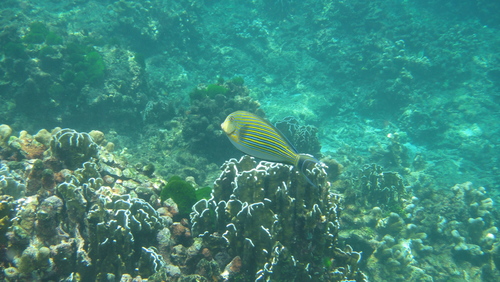
Striped Surgeonfish (Acanthurus lineatus)
Striped Surgeonfish Acanthurus lineatus A brightly striped surgeonfish with alternating blue and yellow horizontal lines on the body and a sharp, retractable spine near the tail.to 38 cm · 1-15 m · by dayshallow, turbulent surge zones on outer reef crestsOften seen in small groups grazing on algae; the tail spine is a defensive weapon, so avoid approaching too closely from behind. no rights reserved · CC0 · observation
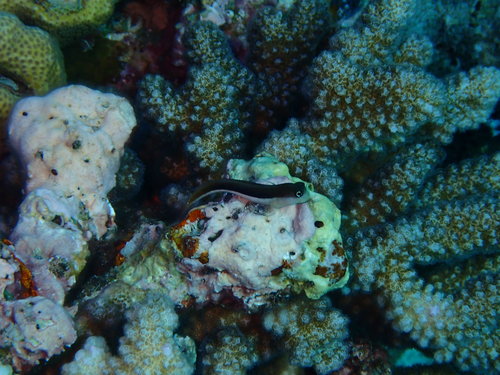
Bicolor Blenny (Ecsenius bicolor)
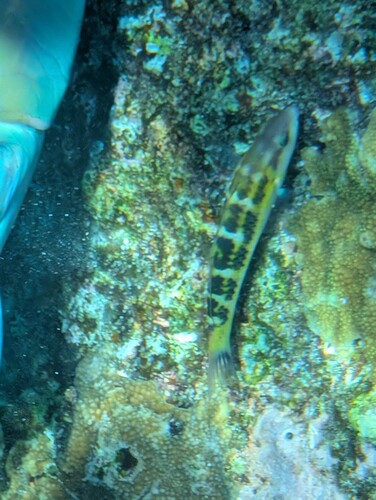
Bicolor Blenny Ecsenius bicolor A small blenny with a distinct two-tone colour pattern, often seen perched on coral or rock with its head poking from a hole.to 11 cm · 0-25 m · by daycoral and rocky reef facesLook for its head watching from small holes or crevices; it retreats quickly if approached directly. (c) luluchouette, some rights reserved (CC BY) · observation
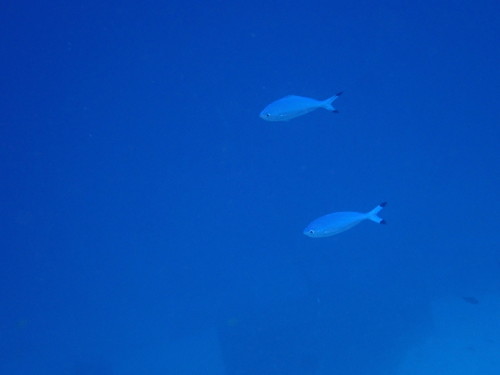
Lunar Fusilier (Caesio lunaris)
Lunar Fusilier Caesio lunaris A schooling fusilier with a silvery-blue body and a distinct yellow patch on the upper tail base, often seen in large, fast-moving groups.to 40 cm · 5-40 m · by dayouter reef slopes and drop-offsLook for shimmering schools in blue water above the reef; they often feed on plankton carried by currents. (c) luluchouette, some rights reserved (CC BY) · observation
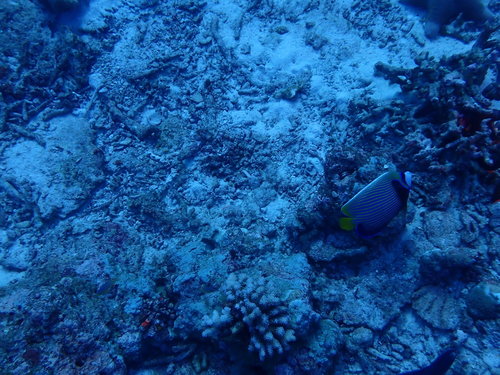
Emperor Angelfish (Pomacanthus imperator)
Emperor Angelfish Pomacanthus imperator A large angelfish with bold blue and yellow stripes on its body and a dark mask over its eyes. Juveniles are dark blue with concentric white and blue circles.to 40 cm · 1-70 m · by dayouter reef slopes and channelsOften seen swimming alone. Listen for a distinct clicking sound it makes while feeding. (c) luluchouette, some rights reserved (CC BY) · observation
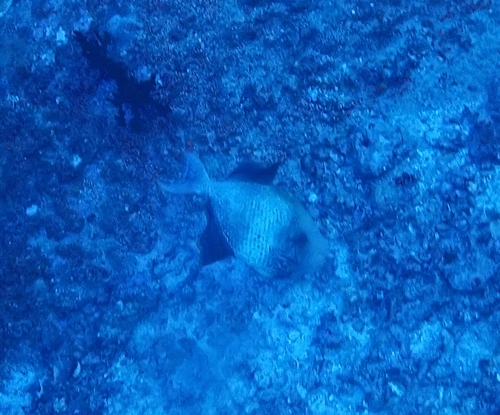
Yellowmargin Triggerfish (Pseudobalistes flavimarginatus)
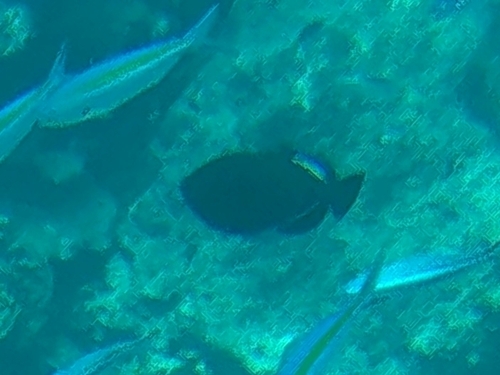
Yellowmargin Triggerfish Pseudobalistes flavimarginatus A large triggerfish with a greyish body, yellow margins on the fins, and a distinct groove before the eyes. It is territorial, especially when nesting.to 60 cm · 1-50 m · by daysandy areas near coral reefs and rubbleGive a wide berth if it is guarding a nest on the sand; it will swim directly at intruders. (c) luluchouette, some rights reserved (CC BY) · observation
Black-finned Triggerfish (Melichthys indicus)
Black-finned Triggerfish Melichthys indicus A dark triggerfish with a pale blue line along the dorsal fin base and a black tail fin. It often swims high above the reef.to 30 cm · 5-40 m · by dayouter reef slopes and channelsLook for it hovering alone or in small groups above the reef crest, often facing into the current. (c) Carlos Otávio Gussoni, some rights reserved (CC BY) · observation
Jansen's Wrasse (Thalassoma jansenii)
Jansen's Wrasse Thalassoma jansenii A slender wrasse with a greenish-blue body, a yellow tail, and a distinctive black spot on the dorsal fin base.to 20 cm · 3-40 m · by dayouter reef slopes and channels with rich coral growthOften seen swimming in small groups above the reef; look for the black spot on its back. (c) Zac Peterson, some rights reserved (CC BY) · observation
Humpnose Unicornfish (Naso tonganus)
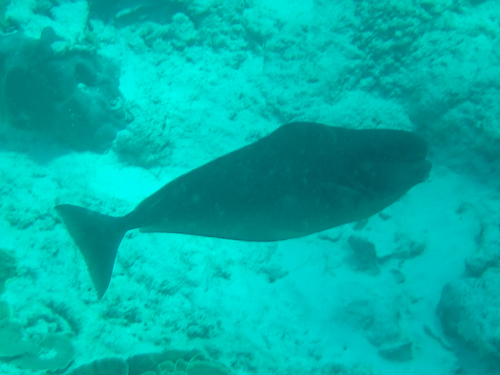
Humpnose Unicornfish Naso tonganus A large, grey surgeonfish with a prominent hump on the forehead and a pair of sharp caudal spines on the tail base.to 60 cm · 5-40 m · by dayouter reef slopes and channelsOften seen in small groups; look for the distinctive hump on the snout and the bright orange caudal spines. (c) CaracalShan, some rights reserved (CC BY) · observation